
‘Weapons’ Misses the Mark, But Still Manages to Entertain
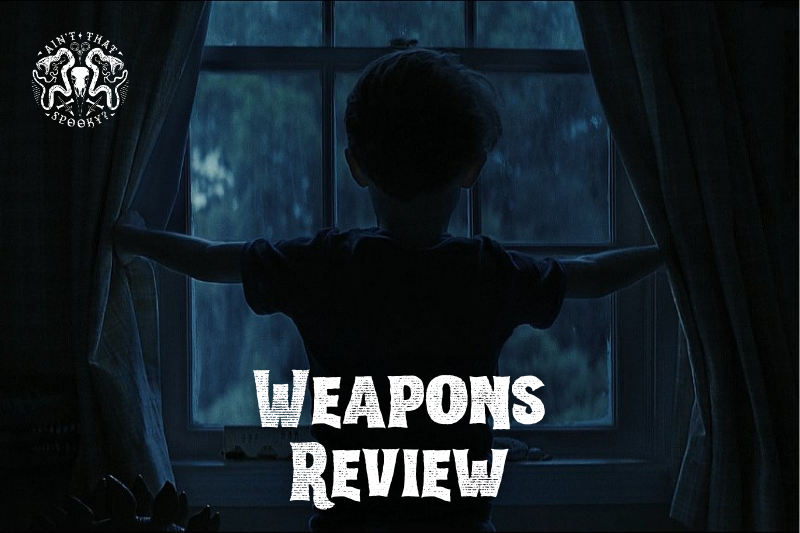
At a Glance: A lack of focus and overuse of non-linear storytelling kneecap Weapons, an admittedly funny and frightening film – but one that may leave you feeling disappointed and disconnected from the core cast by the end.
Weapons was among my most-anticipated horror films of the year, and like many of my other most-anticipated horror films of the year (looking at you, 28 Years Later), I left the theater disappointed. This may have been a result of my high expectations after director Zach Cregger’s wonderfully original Barbarian, or from the hype beast that was Weapons marketing campaign.
It’s not that Weapons is a wholly bad film. There was a lot to enjoy, and I found myself cracking up with the rest of the audience at the film’s many comedic beats. Zach Cregger’s comedy chops shone throughout the picture (he was a member of The Whitest Kids U Know, after all) and his darkly humorous writing was a highlight of the film.
The big problem with with Weapons comes down to story and pacing. The film takes place in the wake of a mysterious tragedy, where all but one child in a second-grade classroom disappear in the middle of the night. Their teacher, played wonderfully by Julia Garner, is the prime suspect in the mind’s of many angry and confused parents (including Josh Brolin’s Archer), and she is pulled further into the mystery by her desire to speak with the sole survivor of her class – Alex (played by the brilliant young actor Cary Christopher).
The film starts off incredibly strong, building a sense of terror that plays on the real-world fears that many Americans are experiencing in the era of mass shootings. The mystery is intriguing, and the outrage of the community is visceral. Julia Garner’s Justine becomes a lightning rod for blame, and we watch as her life slowly spirals out of control in humiliating fashion.
As the mystery twists and turns and Justine and Archer collide in a dramatic confrontation at a gas station, the film suddenly pivots away from the core cast to focus on an onslaught of side characters. The film is structured in POV chapter, and this is my biggest gripe with the script. At the height of conflict, we cut away to the B-cast for what seems like half the movie. I’m not exaggerating here, we spend a brutally long time away from our key players, going over the same scenes over and over from different perspectives.
At times, these chapters can be downright grueling, and I began to grow increasingly impatient to return to the dramatic scene we initially cut away from. What felt like ages later, we finally get a resolution to that intense sequence. Then there’s a few more scenes, and suddenly the film is over.
This made for an incredibly frustrating viewing experience, as I felt most deeply connected to the characters of Justine and Archer, but ultimately the movie didn’t feel like it was their movie. In fact, it didn’t really feel like anyone’s movie. It’s hard to pinpoint who exactly the protagonist was, or what growth they experienced as a result of their journey.
Spoilers Below:
Perhaps the biggest pop-culture symbol to emerge from this film was Amy Madigan’s Gladys, the Pennywise-like villain of the story. She looks absolutely insane with her bright-red wig and gaudy costuming, and her grotesque appearance will certainly be on the minds of viewers for a very long time. Madigan plays the part well, imbuing the character with a sort of Midwestern aunt’s charm that masks a brutal and vicious predator just below the surface. She is truly scary, but scary isn’t enough in this case.
Throughout the film, we are given hints as to the mastermind of the children’s disappearance (including an annoying obvious bit of foreshadowing in which someone sprays the words “Witch” onto Justine’s car). As it turns out, the villain really is a witch – just not Justine. The reveal comes quickly and with no introduction to the character beforehand, breaking what I believe is a cardinal rule in mystery writing – the audience has to be given a chance to figure it out for themselves.
Unfortunately, “a witch did it” is not the most satisfying reveals for a film built entirely around the mystery of what happened to the kids. It felt clunky, and once we get there the film begins to lose its intrigue at a catastrophic pace.
In the end, Weapons has moments of brilliance that are bogged down by a bloated runtime, choppy storytelling, and an ultimately unsatisfying reveal. I will say, despite my disappointment with the mystery itself, the actually finale of Gladys being torn about by a pack of vengeful children is the most cathartic ending to a film since the theater scene in The Substance.
 Ain't That Spooky
Leave a comment